Inside the Room at the Final Mableton 2045 Hearing
- Matthew Stover

- Apr 16
- 4 min read

On Wednesday, April 15, Mableton residents met at the Riverside EpiCenter for the final public hearing of the Mableton 2045 Plan.
After nearly two years of interviews, public meetings, and community-led planning, John J. Funny, Principal-in-Charge from Grice Consulting Group and Project Manager Allison Stewart-Harris of TSW presented the resulting vision.

The room was lined with large visual boards detailing the city's new "Character Areas" (which guide what style of buildings belong in specific neighborhoods) and the new Community Work Program, an 89-item "To-Do" list for the city over the next five years.
Attendees were encouraged to walk the room and place star stickers next to the projects they were most excited about.
The true pulse of the evening came during the public comment period, where the complexities of building a new city were laid bare.
Here are a few key moments and conversations that caught my attention.

The Easy Wins and the Heavy Lifts
One resident kicked off the discussion by asking what are the "low-hanging fruits" that can happen quickly, and what will be the most difficult to get done.
Mr. Funny explained that transportation improvements are the easiest early wins. Because Mableton now qualifies for potential SPLOST funding, several road and infrastructure projects could be moved forward aggressively.
The heavy lift, he explained, is commercial redevelopment. Attracting private developers and proving economic demand often takes years to "align the stars" between the city's land-use vision and developers who are willing to invest the money.
The Affordability Anxiety
One of the most spirited moments of the night came during an exchange between resident Denny Wilson and the presenters regarding housing. She shared a common worry: how our seniors can age in place and why people in Mableton are feeling "townhome burnout."
"We got a developer now who wants to come here and build in townhomes... Do we become a townhome city?" Wilson asked.
Also stressing the real-world impact on legacy homeowners, she added, "As soon as they start building these million-dollar homes, that means the property value is gonna go up and it's gonna price a lot of us out of our communities."
When Mr. Funny attempted to ease concerns by referencing successful planning tools used alongside the Atlanta Beltline, he sparked fears that trying to build the next major regional destination could also Mableton unaffordable for younger residents.
The Traffic Reality: We Can't Just Build More Roads
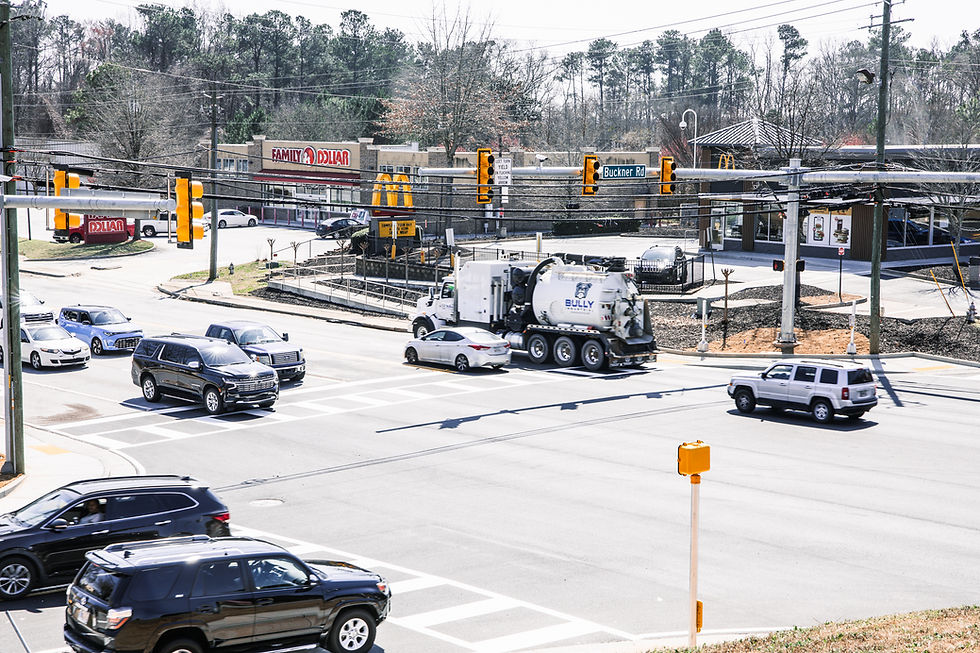
Resident Jolie Elder asked if our infrastructure is already maxed out and how we can grow without gridlock.
Mr. Funny offered a stark reality check: you can't just build your way out of it by laying new asphalt. "We beat our head against the wall on this one," Mr. Funny admitted, noting that putting new North-South or East-West roads would mean ramming them through established, well-loved single-family neighborhoods.
He also shared that 68% of the traffic volume is just passing through Mableton, rather than stopping.
Mr. Funny suggested two ways to handle growth.
First, the city could create more attractive spots along our main roads to give people a reason to stop. These hubs would give commuters a place to shop and eat, making Mableton a place where people want to spend their time instead of just a place they drive through.
Second, he talked about building "nodal communities"—walkable areas that mix homes and shops together. That way, neighbors wouldn't have to get in their cars to go to places like grocery stores and restaurants.
Balancing Density and Transit
The microphone told part of the story, but some of the best insights happened in the side conversations around the room.
Matthew Nicholson praised the land-use vision but noted a major missing link: how we actually move around.

"There is a nice mix of dense and affordable housing types... [and] the plan also preserves the existing suburban character of the city," Nicholson noted.
"But this plan falls short on transportation and street safety. There are lots of projects listed for road improvements and studies, but little mention of cycling infrastructure or improvements to bus routing and frequency. As we grow, the city needs to facilitate denser, multi-modal transportation options to keep Mableton streets safe and traffic manageable."
The Inevitability of Growth

Councilwoman Cassandra Brown (District 4) noted that the Atlanta metro area is projected to absorb millions of new residents in the coming decades.
"The challenge is not how you stop development, but how you manage development in a smart way," Councilwoman Brown explained.
Pointing to the recent successes of newly formed cities like Brookhaven and Douglasville, she emphasized that Mableton is in a unique position to shape this growth strategically.
"It's incredible to see what some of these cities have been able to achieve in not a whole lot of time. And we have some very good timing also in that we are going to get SPLOST dollars, and that didn't come up tonight."
Finding the Opportunity

During a conversation I had with a group of Mableton residents, Lamont offered a powerful reminder about the purpose of these planning meetings.
"What we have to do... is come to an agreement about what we can be right now, today. What are the things that we can agree with? What are the things we can build off of?" he said.
"I see a thousand opportunities in there... I'm looking at this thing like, 'wow, I want to do something with this.'"
Your Final Chance to Weigh In
The public hearing may be over, but the window to shape the Mableton 2045 Plan is not. The city is accepting public input until Monday, April 20th.
If you submit feedback through the city's online portal, please include your name and contact information rather than leaving an anonymous comment. This allows the planning team to personally follow up with you if they need clarification so that your ideas are accurately captured in the final plan.
If you want a quick breakdown of what is actually in the plan before you submit your feedback, I have you covere!. I went through the 229-page draft and put together a cheat sheet of the 5 most interesting highlights that will directly impact our community.



Comments