Rewilding My Lawn
- Stephanie Hanlon

- Apr 9
- 6 min read
Part One: Plants That Found Me

I bought my half-acre historic property in Mableton in 2022 and mowed it dutifully for three years. That third year, I began questioning everything.
Why grow grass just to cut it every week, when there are plants that grow low and never need trimming?
Why not grow things that are edible, that support pollinators, that prevent flooding and erosion, that keep my home cooler?
Why spend hours each weekend harming the environment and spending money on something I never use?
What I discovered when I stopped mowing was a natural apothecary, likely cultivated over generations by the native Cherokee and Muscogee peoples or those who took this land after them. Each new plant has healing properties. I no longer buy cough medicine or antiseptic. Tending this land has given me increased physical activity, better mental health, and a freedom I did not know I was missing. With my trusty “PictureThis” app, I am able to easily identify each new plant I come across.
A few hard-won lessons: do not try to rewild your lawn all at once.
Pick one section, stop mowing, and see what emerges. Remove grass in organized sections, see what comes up and buy seeds native to this area, they do much better than grass and will happily take over with a little help. It takes time for native plants to reestablish a healthy habitat, but I’ve found that much of the foreign grass we put down, doesn’t really want to be there, and the native stuff like pink sorrel will happily fill in the gaps and give a beautiful display.
Below are the plants that emerged on their own when I stopped mowing.
💙 Bird's Eye Speedwell Veronica persica

Season: Year-round in mild climates. Cool-season annual — blooms late winter through spring, dies back in summer heat.
Edible / Medicinal: Young leaves are edible raw or cooked, mildly bitter like watercress. Acts as an expectorant for respiratory support; also applied as a poultice for minor skin irritations.
Ecological Impact: One of the earliest nectar sources of the year, providing critical food for bees when little else is in bloom.
How to Use: Add young leaves to salads before flowering. Steep dried aerial parts as a respiratory tea. Crush and apply leaves to minor skin irritations.
🌸 Pink Sorrel Oxalis crassipes / Oxalis articulata
Season: Semi-evergreen. Returns reliably from bulblets after freezes. Blooms spring through fall.
Edible / Medicinal: Leaves, stems, and flowers are edible with a pleasant tangy lemon flavor. Traditionally used as a digestive aid. Consume in moderation — high oxalic acid is not suitable for those prone to kidney stones.
Ecological Impact: Suppresses weeds with dense low-growing foliage. Pink blooms attract small native bees and butterflies across multiple seasons.
How to Use: Toss fresh leaves into salads or use as a lemon substitute in dressings. Steep in cold water for a refreshing drink.
💜 Common Blue Violet Viola sororia

Season: Deciduous — dies back in winter, returns reliably in spring from a robust rhizome. Foliage lasts through fall.
Edible / Medicinal: Highly edible: leaves contain more vitamins A and C than oranges by weight. Flowers are beautiful in salads or candied. Medicinally used for headaches, respiratory congestion, and skin conditions; rich in rutin for vascular health.
Ecological Impact: Essential host plant for fritillary butterfly caterpillars. Key nectar resource for native bees. Self-seeds reliably even without pollinators.
How to Use: Add young leaves to salads or saute like spinach. Steep flowers in honey. Make violet leaf tea for respiratory support or infuse leaves in oil as a skin balm.
🌿 Henbit Lamium amplexicaule
Season: Cool-season annual — overwinters, blooms late winter to spring, absent in summer.
Edible / Medicinal: Fully edible with a mild, slightly mushroomy flavor. Medicinally used to break fevers and ease inflammation; rich in iron and vitamins.
Ecological Impact: Among the first flowers of late winter, providing critical nectar for emerging queen bumblebees and honeybees when almost nothing else is available.
How to Use: Add to salads, stir-fries, or smoothies. Blanch and use like cooked greens. Harvest before or during flowering for best flavor.
🌺 Dead Nettle (Purple) Lamium purpureum
Season: Cool-season annual — overwinters as a low rosette, blooms late winter through spring, dies back in summer.
Edible / Medicinal: Young leaves and flowers are edible raw or cooked, mild and slightly sweet. Astringent properties make it useful for staunching minor bleeding and soothing skin irritations.
Ecological Impact: Tubular purple-pink flowers are specially shaped for bumblebee pollination, making it an important early spring nectar plant.
How to Use: Add fresh young leaves to salads or cook briefly as greens. Crush and apply leaves as a poultice to minor cuts. Brew as a simple tea from fresh or dried leaves.
🧅 Wild Onion Allium canadense / A. vineale
Season: Cool-season — greens emerge fall through spring. Harvestable nearly year-round in mild climates.
Edible / Medicinal: All parts edible — use leaves, bulbs, and aerial bulblets anywhere you would use green onions or garlic. Strong antimicrobial and cardiovascular medicinal history thanks to allicin compounds.
Ecological Impact: Early nectar plant; bulbs attract and feed wildlife. Fully self-sustaining and spreads naturally.
How to Use: Snip leaves like chives, dig bulbs for cooking, or use bulblets in place of garlic. Excellent pickled, sauteed, or raw. Always confirm identity by smell before consuming.
🌼 Wild Daffodil Narcissus pseudonarcissus
Season: Spring ephemeral — blooms early spring, foliage dies back by early summer. Bulbs dormant the rest of the year.
Edible / Medicinal: Toxic to humans and pets. Do not consume any part. Contains lycorine and related alkaloids causing serious illness.
Ecological Impact: Deer and rodent resistant. One of the earliest spring flowers for pollinators. Naturalizes beautifully under trees.
How to Use: Enjoy visually only. Plant bulbs in fall for reliable spring color. Handle with gloves if skin-sensitive, as sap can cause irritation.
🌸 Carolina Cranesbill Geranium carolinianum
Season: Annual or biennial — blooms spring through early summer, self-seeds prolifically.
Edible / Medicinal: Leaves are edible but very astringent and bitter — better used medicinally. High tannin content makes it effective for digestive issues, sore throats, and wound care.
Ecological Impact: Native species supporting native bees. Distinctive long-beaked seed capsules add natural interest and contribute to ecological diversity.
How to Use: Brew a strong tea from leaves and roots as a digestive aid or gargle for sore throats. Apply cooled tea topically to inflamed skin. Use sparingly due to high tannin content.
🌿 Bitter Dock Rumex obtusifolius
Season: Evergreen rosette in mild climates, persisting year-round except in hard freezes. Sends up tall flowering stalks in summer.
Edible / Medicinal: Young leaves edible but strongly bitter — boil in multiple water changes to reduce bitterness. Seeds can be ground into flour. Medicinally, the root is a liver tonic, gentle laxative, and traditional remedy for eczema and psoriasis.
Ecological Impact: Deep taproot breaks up compacted soil and mines nutrients from deep layers, benefiting surrounding plants. Seeds eaten by birds.
How to Use: Harvest very young spring leaves and boil with 2-3 water changes. Grind seeds for flour. Simmer dried root as a decoction for liver support. Apply crushed fresh leaves to soothe nettle stings.
🌟 Dandelion Taraxacum officinale
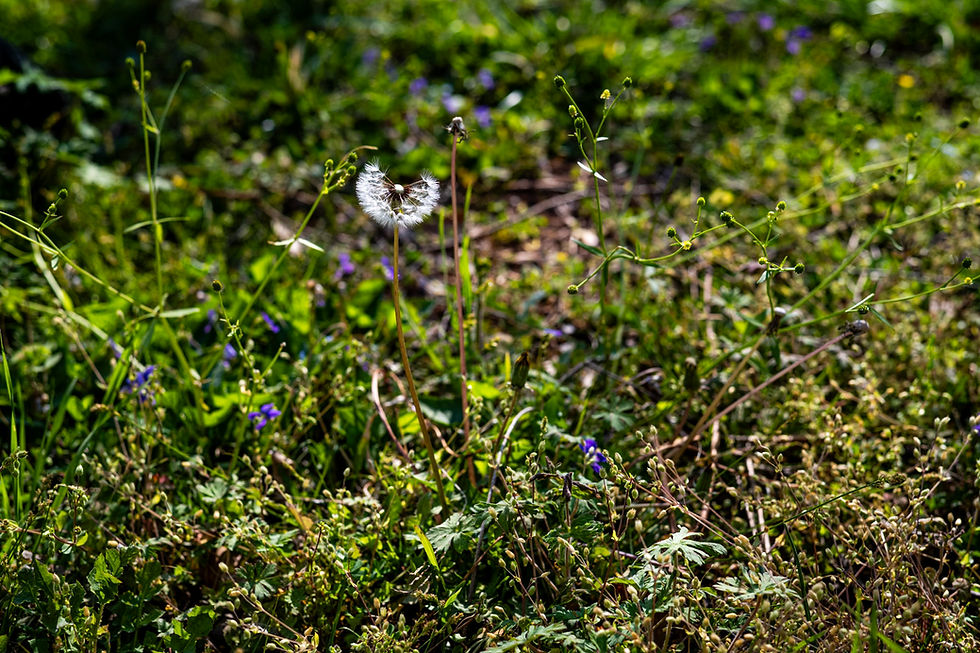
Season: Year-round. Semi-evergreen rosette persisting through all but the hardest winters. Blooms multiple times from early spring through fall.
Edible / Medicinal: Entirely edible root to flower — one of the most nutritious wild plants available. Medicinally exceptional: root supports liver function and digestion; leaves are a natural potassium-replenishing diuretic; root contains prebiotic inulin for gut health.
Ecological Impact: Provides nectar and pollen for over 100 insect species. Deep taproot aerates compacted soil and brings up minerals for surrounding plants.
How to Use: Young leaves in salads, smoothies, or sauteed as greens. Flowers as fritters or infused in honey. Roast roots as a coffee substitute or simmer in soups. Dry leaves for tea.
🟢 Moss Bryophyta (various species)
Season: Evergreen year-round. Looks lush even in winter. Turns brown when dry but revives immediately with moisture.
Edible / Medicinal: Not edible. Sphagnum moss is mildly antiseptic and highly absorbent — used historically as an emergency wound dressing.
Ecological Impact: Retains moisture, prevents erosion, sequesters carbon, and provides microhabitat for invertebrates and soil organisms. Requires zero maintenance once established.
How to Use: Cultivate as a no-mow, no-fertilizer ground cover in shaded, moist areas. Encourage with acidic conditions and by removing competing grass. Use sphagnum as an emergency wound dressing if needed.
Always make a confident identification before consuming any wild plant. When in doubt, consult a local forager or botanist. Start with small amounts of any new edible plant.
---
Revolution Garden is a column documenting my journey toward food independence and environmental stewardship — a process of relearning what our collective ancestors practiced for thousands of years: a mutually beneficial relationship with land and community.
Visit the Historic Mableton Trading Post on Mable Street near Peak Street to trade seeds, vegetables, books, and art.
If you’d like to learn more about me or support this work:
Instagram: https://www.instagram.com/overstoryart/
Website: www.stephaniehanlon.com
Support Local and Independent Media by donating directly to this author:
Cash App: https://cash.app/$Stephaniestx

Comments